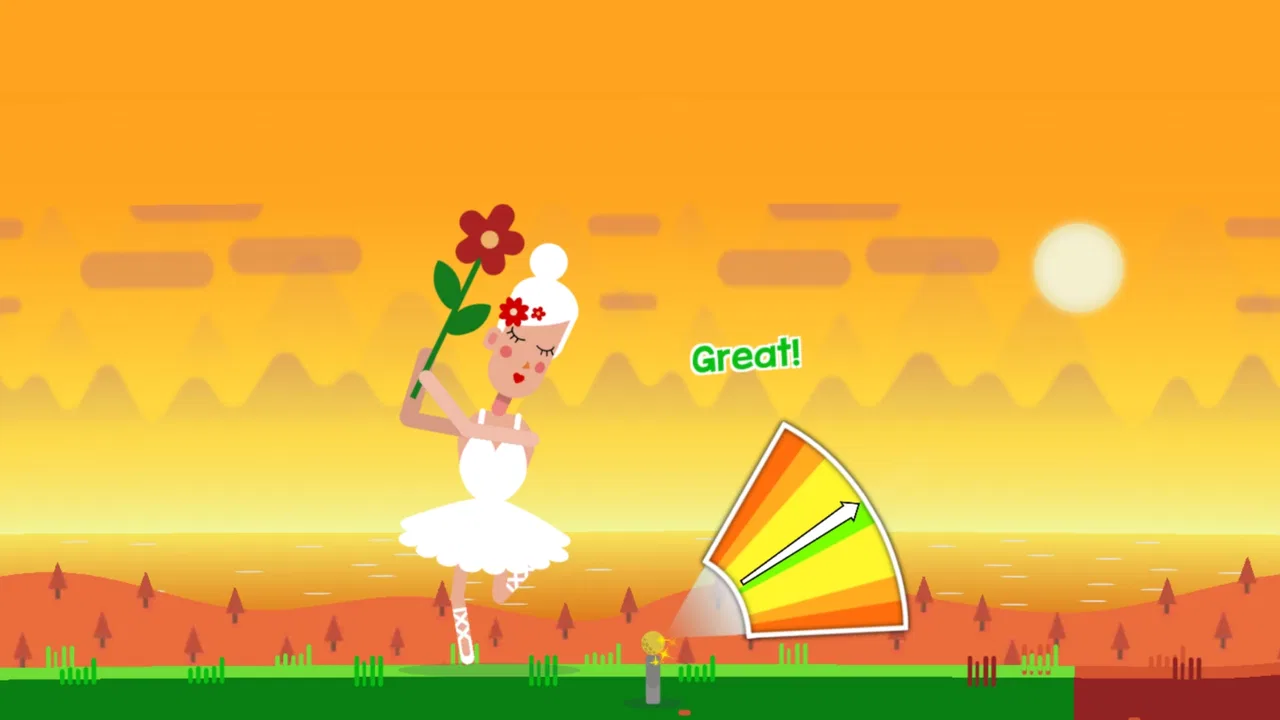
Golf Orbit: Oneshot Golf Games
- 3.4
- Rating
- 5.00M
- Installs
- Free
- Price

 Analysis by App-foxy
I went into Golf Orbit: Oneshot Golf Games expecting a light sports game, and that is exactly where it works best. It takes the familiar idea of hitting a golf ball and turns it into a compact, exaggerated challenge built around getting one shot right. The setting is much less traditional than a normal course, with the game inviting you to imagine golf beyond Earth, including Mars. That simple twist gives each attempt a playful sense of scale without asking me to learn a complicated ruleset.
Golf Orbit is a free sports game from TapNation, rated for Everyone. It has attracted more than five million installs, while its average rating sits at 3.4 from roughly forty-three thousand ratings and about four thousand eight hundred written reviews. Those numbers tell me something useful before playing: the concept has reached a sizeable audience, but the experience is not universally satisfying. I found it easy to start, though enjoying it for a long session depends heavily on how comfortable I am with repetition and gradual progress.
What the one-shot idea feels like in practice
The central appeal is the short attempt. I do not need to settle in for a full round or memorize a large course. I focus on a shot, watch the result, and decide whether I want to try again. That makes it a natural choice when I have a few spare minutes, such as while waiting for a bus or taking a short break between tasks. The game’s unusual planetary theme also helps separate it from ordinary mobile golf, where the goal is usually to imitate a real course more closely.
You May Also Like

 Google Keep - Notes and lists
Google Keep’s Quiet Growth Shows the Appeal of Simpler Notes
As mobile work gets busier, Google Keep keeps winning a simple contest: capture a thought quickly, find it later, and get on with the day.

 Blood Strike: 2.5 Anniversary
Blood Strike’s Loadouts Turn Every Drop Into a Tactical Gamble
A close look at Blood Strike’s custom loadouts: how fast access to signature weapons reshapes its battle royale rhythm, rewards preparation, and narrows the gap between fights.

 Pandora - Music & Podcasts
Pandora’s Music Is Easy to Start, but Harder to Recover
Pandora’s strength is its low-effort path from a seed to a station. Its weak spot is how much confidence it asks you to place in connection, setup, and quiet recovery.

 8 Ball Pool
 Is Built on Rivalries, Rematches, and Routine
A close look at the rivalries, rematches, shared routines, and unanswered safety questions that turn a quick pool match into a persistent mobile community.

 Samsung Music
’s Quiet Strength Is Playing What You Already Own
Its reach comes less from spectacle than from dependable access to a personal library. That simplicity is both the app’s strongest retention engine and its ceiling.

 AccuWeather: Weather Radar
AccuWeather Review: A Quick, Clear Forecast for Everyday Decisions
For everyday plans, the best forecast is the one you can understand quickly. AccuWeather makes rain timing, radar, and local conditions easy to act on, with a few trade-offs.
More From Our News Desk



That accessibility comes with a trade-off. A one-shot format can feel wonderfully clean at first, but it also places a lot of weight on the same basic action. If you want a deep golf simulation with club selection, wind reading, detailed course management and a long competitive round, this is not the right destination. I would choose a conventional golf game for that. Here, the pleasure comes from trying to improve a single result rather than managing every part of a realistic match.
The most useful way I found to approach each attempt was to treat it as a small experiment instead of an isolated win-or-lose moment. I paid attention to the timing of my input, watched how far the ball travelled, and changed one part of my approach at a time. Randomly tapping faster did not teach me much. Repeating a shot with one deliberate adjustment made the progress easier to understand, especially when I was trying to beat a previous result rather than simply finish a session.
Why the space setting matters
The Mars concept is more than a line of decoration because it changes the mood of the game. A familiar sport becomes a playful fantasy activity, and that makes failure easier to accept. Missing a shot in a serious golf simulation can feel like a technical mistake; here, the exaggerated setting makes the whole attempt feel more like an arcade challenge. I enjoyed that difference when I wanted something cheerful rather than a demanding recreation of the sport.
At the same time, the theme does not automatically create unlimited variety. A new setting can make the first sessions memorable, but the underlying loop still needs to hold attention. My interest stayed strongest when I had a clear personal target, such as improving the next attempt or reaching a better result before closing the game. Without that self-imposed goal, the short sessions could start to blend together.
Progress can be motivating, but also repetitive
Golf Orbit is most comfortable for players who like incremental improvement. I could play briefly, put it down, and return later without needing to reconstruct a complicated strategy. That is a genuine advantage over larger sports games that demand a longer uninterrupted session. It also makes the game approachable for younger players and casual users who want an uncomplicated activity rather than a full competitive package.
The pressure comes from repetition. When a result is just short of what I want, the game encourages another attempt, then another. That can be satisfying if I am in the mood to refine my timing, but tiring if I am looking for constant new events. My practical advice is to set a stopping point before starting a long session. A handful of focused attempts felt more enjoyable than continuing automatically after my attention had gone.
One small but important habit is to separate progress from spending. Because the game is free to download and includes in-app purchases priced from ninety-nine cents to $114.99 per item, I would decide in advance whether I am willing to buy anything at all. I did not treat a purchase as part of the basic requirement for trying the game. Anyone using a shared device, especially with children, should also review purchase controls before handing it over. The available price range is enough reason to make that decision deliberately rather than during an impulsive session.
Where the pressure comes from
The pressure in this kind of game is mostly self-created: beat the last attempt, reach a better distance, or keep improving despite a disappointing result. That can be healthier than a game that demands long daily commitments, but it still creates a loop where “one more try” is easy to justify. I found the experience more relaxing when I treated each attempt as optional rather than feeling that I had to recover from a poor shot.
Spending deserves a careful distinction here. The game is free, but the presence of paid items means the free experience and the complete spending experience are not necessarily the same thing. I would not assume that buying something guarantees better skill, fairer competition or more enjoyment. The listed purchase range gives a clear warning about possible expense, but it does not by itself explain what each item does. That is a point where I would read the purchase screen carefully and avoid buying simply because progress feels slow.
Is it fair for competitive play?
For personal play, fairness is fairly straightforward: I can judge the game by my own attempts and choose whether the loop remains enjoyable. Competitive fairness is more complicated. A score-based golf game can feel fair when results mainly reflect timing and practice, but that impression changes if paid items influence performance or progression. I would not present Golf Orbit as a guaranteed level playing field, because the available purchase information confirms paid items but does not establish how they affect competition.
That uncertainty matters most if your main reason for downloading is to compare yourself with other players. I would approach it as an arcade sports game first and a competitive test second. If you need clearly explained rankings, transparent rules and confidence that spending cannot affect results, a more dedicated competitive sports title may be a better fit. Golf Orbit is easier to recommend when the goal is beating your own previous performance.
A useful fairness test is to play without buying anything for long enough to decide whether the basic shot loop is enjoyable. If the game is fun only when progress is accelerated, that tells me the value is not coming from the core action alone. If I can enjoy short sessions and improve through practice, the free version has a stronger case. This approach also prevents the unusual setting from persuading me to spend before I know whether the repetition suits me.
What I would want to know before spending
The purchase range is clear, but the practical meaning of those purchases is not. I would want to know which items are permanent, which are consumable, whether they affect the result of a shot, and whether they mainly change convenience or presentation. Those distinctions are important because a cosmetic purchase feels very different from one that changes a competitive outcome. I would check the wording on each individual purchase instead of assuming that all items serve the same purpose.
I would also avoid treating the game’s audience size as proof that every part of it is reliable for me. More than five million installs show that many people have tried it, while the 3.4 average suggests a mixed reception. Neither figure predicts my personal experience. The rating is a useful signal to keep expectations measured, especially if I am looking for a polished long-term sports game rather than a quick arcade distraction.
There are practical compatibility details worth noting. The game is listed for devices running Android 7.0 or later, and the current version is 1.41. That makes checking the operating system worthwhile before downloading, particularly on an older phone or tablet. I would also leave enough storage and use a stable connection for installation and updates, but I would not make assumptions about performance on every device. Hardware age, screen response and battery condition can all change how comfortable repeated timing-based shots feel.
Everyday situations where it works well
My favorite use case is a short waiting period. If I have five minutes before an appointment, I can open the game, make several attempts and stop without losing the thread of a larger match. It also fits a relaxed evening when I want something interactive but do not want to follow a story or compete in a demanding multiplayer session. The space-golf premise gives those small moments more personality than a plain score-chasing exercise.
It can also work as a casual family game because the age rating is Everyone and the basic idea is immediately understandable. I would still supervise purchases on a shared device. For a child, the important lesson is that repeated attempts do not require buying an item. For an adult, the same boundary helps keep a free download from quietly becoming an expensive habit.
On the other hand, I would skip it if I want realistic golf technique. Someone interested in reading a course, choosing clubs or learning the details of the real sport will get more from a simulation. I would also skip it if I dislike retry loops, because the short-shot structure naturally asks me to repeat similar actions. Players who need a large variety of modes may find the central idea too narrow once the novelty of golfing in space wears off.
How it compares with ordinary mobile golf
Compared with traditional mobile golf games, Golf Orbit is less concerned with recreating a complete round and more interested in making one attempt immediately understandable. That makes it faster to pick up and easier to fit into a busy day. A conventional golf game usually rewards patience across several holes; this one rewards attention to a compact action and the willingness to try again.
Compared with endless arcade games, it has a clearer sports identity. The golf framing gives the player a reason to care about distance and accuracy, while the planetary setting keeps the tone light. Still, it does not replace a full arcade collection if you need many different challenges. Its strength is focus, not breadth.
Compared with a competitive golf title, I would judge it more by feel and convenience than by tournament depth. The lower commitment is a benefit, but it also means that a player searching for detailed strategy may quickly outgrow it. My recommendation changes depending on that expectation: for a quick, unusual golf-inspired game, it is worth trying; for a serious sports career, I would look elsewhere.
My trust verdict for a free game
I trust Golf Orbit most when it is treated as a free-to-try arcade experience, not as a promise of a complete golf simulation. TapNation has made the entry point simple, and the Mars idea gives the game a recognizable identity. The free price removes the initial barrier, while the Everyone rating makes it broadly approachable. Those are meaningful positives for a casual download.
My caution is centered on spending and expectations. Paid items range from ninety-nine cents to $114.99 per item, so I would not leave purchasing decisions to a rushed moment. I would first establish whether the basic one-shot loop is enjoyable without spending and whether the game’s pace matches my tolerance for repetition. That is especially important because the average rating is mixed rather than outstanding.
After playing, I see this as a good companion for short breaks, casual score chasing and players who enjoy playful twists on familiar sports. I would recommend it to a friend who wants quick attempts and does not need realistic golf rules. I would not recommend it to someone seeking transparent competitive balance, deep course strategy or a clearly simulation-focused experience. The safest way to enjoy it is to judge the free core first, keep spending intentional, and use personal improvement—not purchases—as the main measure of progress.
In the end, the game’s appeal is specific and easy to understand: it turns golf into a compact space-themed challenge that can be picked up without preparation. That simplicity is both its strongest feature and its main limitation. If that trade-off sounds appealing, the free download is a reasonable experiment. If you already know that repeated one-shot attempts frustrate you, the unusual setting will probably not be enough to change your mind.
FAQs for Golf Orbit: Oneshot Golf Games
01What is the main objective of Golf Orbit: Oneshot Golf Games?
Golf Orbit: Oneshot Golf Games is designed to provide a fun and casual golfing experience where the main objective is to see how far you can hit the golf ball. Players can enjoy the challenge of reaching new distances, unlocking achievements, and upgrading their equipment to achieve the longest possible drive.
02Is Golf Orbit: Oneshot Golf Games free to play?
Yes, Golf Orbit is free to download and play on both Android and iOS platforms. However, it does offer in-app purchases for players who wish to enhance their gaming experience by acquiring new items or upgrades faster. These purchases are optional and not necessary to enjoy the game.
03What kind of in-game purchases are available?
In Golf Orbit: Oneshot Golf Games, players can purchase various upgrades and items to improve their gameplay. These include better golf clubs, balls, and boosters that help you hit the ball farther. The game also occasionally offers special bundles and deals that can enhance your experience.
04Are there any ads in Golf Orbit: Oneshot Golf Games?
Yes, the game includes ads, which help support the free-to-play model. Players may encounter ads between rounds or when opting to receive certain in-game rewards. However, there is an option to remove ads through a one-time purchase if you prefer an uninterrupted gaming experience.
05Does Golf Orbit require an internet connection to play?
Golf Orbit: Oneshot Golf Games can be played offline, making it a great option for players who don't have constant internet access. However, certain features, like in-app purchases and leaderboards, require an internet connection to function. Playing offline won't hinder your ability to enjoy the core gameplay.
Pros
- Smooth and intuitive controls.
- Visually appealing graphics.
- Variety of challenging courses.
- Offline play available.
- Regular updates with new features.
Cons
- In-app purchases can be pricey.
- Ads can interrupt gameplay.
- Limited customization options.
- Can drain battery quickly.
- Occasional lag on older devices.

Golf Orbit: Oneshot Golf Games
Gallery